






Not ready for a demo?
Join us for a live product tour - available every Thursday at 8am PT/11 am ET
Schedule a demo
No, I will lose this chance & potential revenue
x
x

Lorem ipsum dolor sit amet, consectetur adipiscing elit, sed do eiusmod tempor incididunt ut labore et dolore magna aliqua. Ut enim ad minim veniam, quis nostrud exercitation ullamco laboris nisi ut aliquip ex ea commodo consequat. Duis aute irure dolor in reprehenderit in voluptate velit esse cillum dolore eu fugiat nulla pariatur.
Block quote
Ordered list
Unordered list
Bold text
Emphasis
Superscript
Subscript

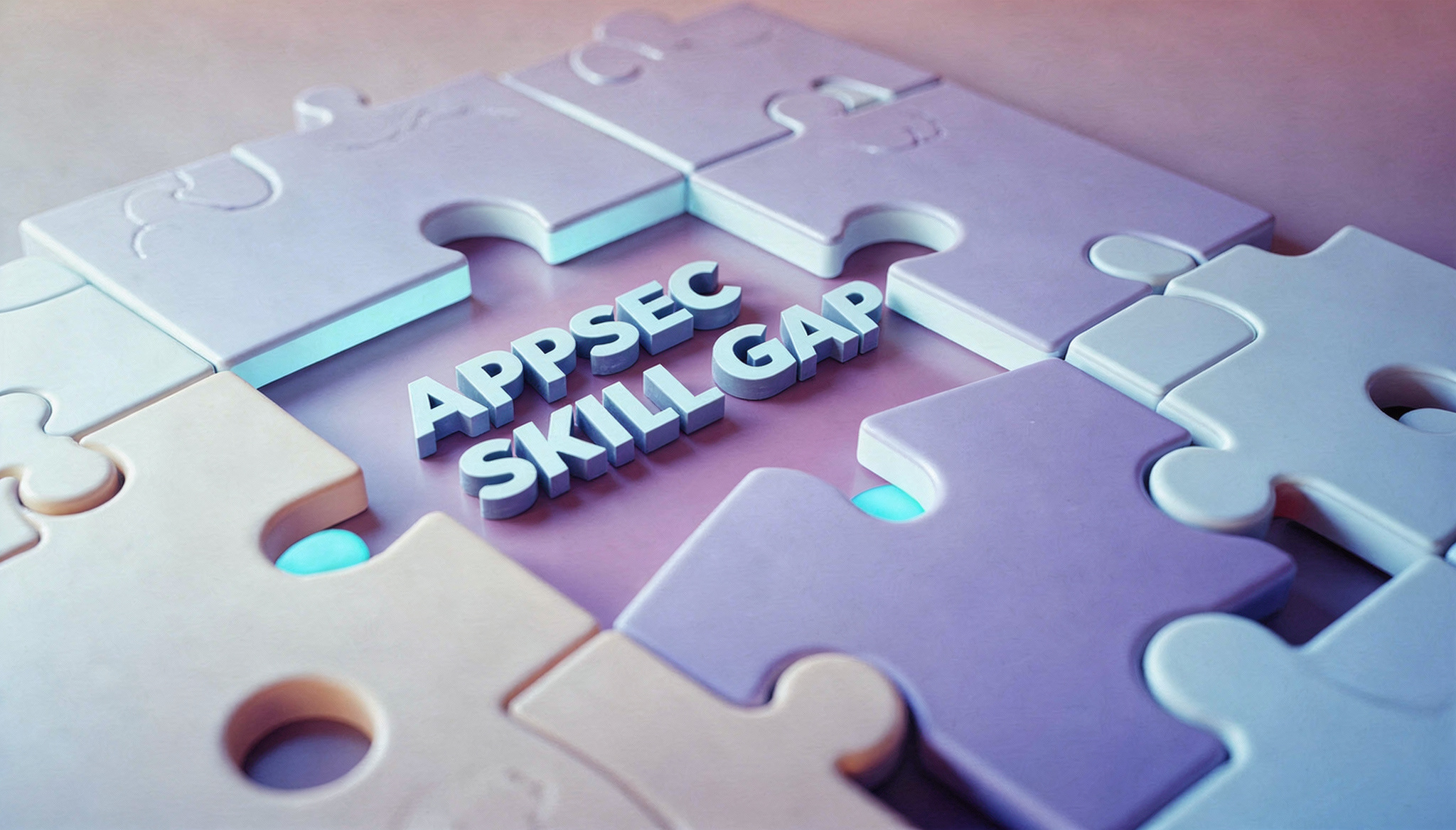
The current approach is scattered, lacking a structured path that aligns with how AI systems are actually built, specifically across data pipelines, model interfaces, inference layers, and APIs. Training is often fragmented, comprising general GenAI bootcamps or generic secure coding modules that do not address critical, AI-specific risks such as prompt injection, model abuse, or data leakage. This inconsistency prevents teams from establishing a shared baseline of risk, resulting in developers building systems without fully understanding the required security attack surfaces.
Fragmented training leads to significant blind spots in security. Key AI-specific attack surfaces are frequently ignored during threat modeling, including prompt injection and data exfiltration via model responses. Secure coding practices often fail to account for the necessary validation of AI outputs or safe prompt construction. Furthermore, CI/CD pipelines may treat AI components as standard services, neglecting essential controls for input validation, output filtering, and model access.
An effective strategy combines three sequential layers: Instructor-Led Training (ILT) for alignment, Bootcamps for acceleration, and continuous training platforms for ongoing reinforcement. ILT is used first to establish a shared understanding of AI risk among CISOs, architects, and security leaders, defining the scope, secure-by-design requirements, and mapping governance frameworks like NIST AI RMF. Hands-on bootcamps then accelerate practical skills like threat modeling for LLM pipelines and mitigating issues such as data leakage and prompt injection. Finally, continuous training platforms embed role-specific reinforcement directly into daily workflows, code reviews, and CI/CD pipelines to sustain security capability.
ILT is typically the initial investment for CISOs, serving as a fast and effective method to align leadership on AI risk. It functions best at the architect and leadership level to define the problem space, build a shared risk understanding, and set clear expectations for secure AI development across teams. These sessions focus on defining what "secure by design" means for LLMs and integrations, and ensuring governance aligns with frameworks such as NIST AI RMF. ILT can be delivered as enterprise-led workshops focusing on internal architecture or vendor-led sessions tied to specific cloud ecosystems.
Bootcamps are scenario-driven sessions that deliver hands-on depth, enabling engineers to build immediate practical skills in secure design and mitigation techniques for agent and LLM workflows. However, the impact of bootcamps can diminish without constant reinforcement. Platforms address this by providing ongoing, role-specific training that is integrated into daily engineering workflows, such as learning while writing code or aligning security checks with CI/CD pipelines. Platforms ensure continuous skill reinforcement, while bootcamps primarily serve as a method for initial skill acceleration.
To close compliance gaps, effective AI security training must align development and security practices with established governance frameworks. The structured training process helps address compliance gaps across frameworks such as the NIST AI Risk Management Framework (NIST AI RMF) and the EU AI Act. Aligning security and governance with these standards is a core focus of the initial Instructor-Led Training stage.

.png)


Koushik M.
"Exceptional Hands-On Security Learning Platform"

Varunsainadh K.
"Practical Security Training with Real-World Labs"

Gaël Z.
"A new generation platform showing both attacks and remediations"

Nanak S.
"Best resource to learn for appsec and product security"


.png)


Koushik M.
"Exceptional Hands-On Security Learning Platform"

Varunsainadh K.
"Practical Security Training with Real-World Labs"

Gaël Z.
"A new generation platform showing both attacks and remediations"

Nanak S.
"Best resource to learn for appsec and product security"


United States11166 Fairfax Boulevard, 500, Fairfax, VA 22030
APAC
68 Circular Road, #02-01, 049422, Singapore
For Support write to help@appsecengineer.com