






Not ready for a demo?
Join us for a live product tour - available every Thursday at 8am PT/11 am ET
Schedule a demo
No, I will lose this chance & potential revenue
x
x

Lorem ipsum dolor sit amet, consectetur adipiscing elit, sed do eiusmod tempor incididunt ut labore et dolore magna aliqua. Ut enim ad minim veniam, quis nostrud exercitation ullamco laboris nisi ut aliquip ex ea commodo consequat. Duis aute irure dolor in reprehenderit in voluptate velit esse cillum dolore eu fugiat nulla pariatur.
Block quote
Ordered list
Unordered list
Bold text
Emphasis
Superscript
Subscript
.avif)
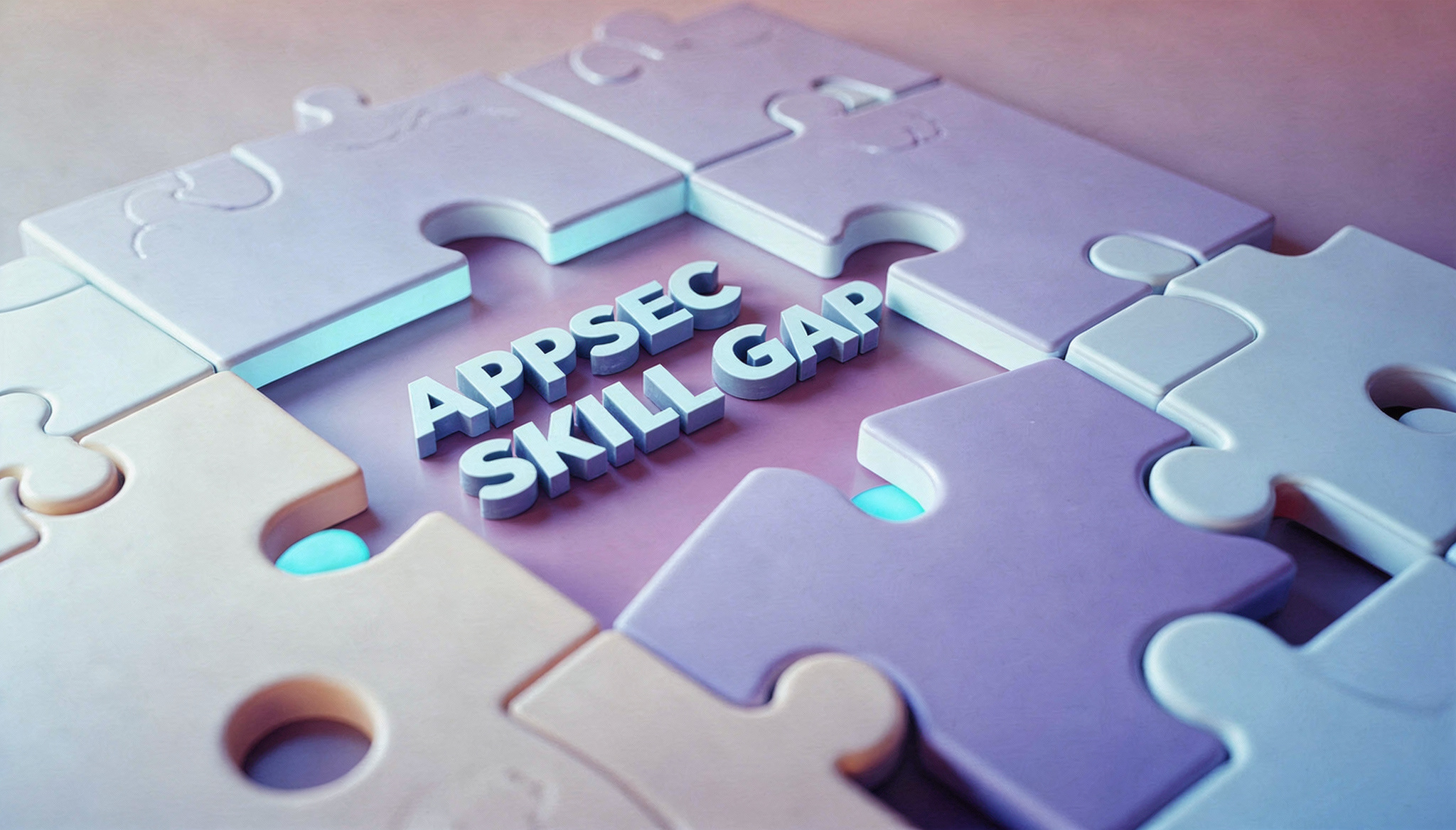
The AppSec skills crisis is the gap between how fast engineering teams deliver software and how quickly security capability scales across the organization. The issue is not simply a shortage of AppSec engineers. It is the concentration of security knowledge inside a small group of specialists while development teams continue expanding application environments, cloud infrastructure, APIs, CI/CD pipelines, and AI-assisted workflows. This creates operational bottlenecks where security reviews, threat modeling, and design decisions depend on a few people.
Engineering environments changed significantly over the last few years. Organizations now support: Cloud-native architectures Microservices ecosystems API-first applications CI/CD pipelines with frequent releases Distributed engineering teams AI-assisted development workflows Engineering output increased while AppSec teams often remained relatively flat. This creates more security decisions, larger attack surfaces, and greater review demand without proportional growth in security capability.
Hiring contributes to the challenge, but it is not the root problem. Many organizations continue adding tools and expanding AppSec teams while security activities still depend on a few specialists. Typical examples include: Threat modeling owned by two or three senior practitioners Secure design reviews handled by one architect Security approvals routed through a small AppSec team Developers treating security as external ownership This model creates bottlenecks even after increasing headcount.
When security decisions depend on a small group, review queues grow as engineering output increases. Teams begin waiting for architecture reviews, threat models, and approvals while releases continue moving. This leads to: Delayed releases Reduced review coverage Higher remediation costs Security debt accumulation Increased pressure on senior AppSec teams The risk becomes operational because delivery velocity depends on specialist availability.
In many organizations, threat modeling still relies on workshops facilitated by senior AppSec experts. Reviews happen periodically and focus on critical systems because specialist capacity is limited. As environments grow, new services, APIs, and cloud components may ship without security analysis. High-maturity organizations move threat modeling closer to engineering teams through feature-level reviews, sprint-based analysis, and developer participation.
Traditional security education frequently focuses on awareness instead of capability. Common approaches include: Annual awareness modules OWASP Top 10 memorization Generic compliance training Passive learning programs One-size-fits-all learning paths Engineers complete training but may still struggle with threat modeling, architecture analysis, cloud security decisions, and API risk assessment. Security capability improves when learning maps directly to engineering workflows.
OWASP Top 10 remains useful for awareness, but modern environments require broader capability. Current attacks frequently involve: Chained exploits API abuse paths Cloud misconfigurations CI/CD compromise Supply chain attacks Identity exposure An engineer who understands vulnerability categories may still struggle with cloud privilege escalation paths, deployment risks, or pipeline compromise scenarios. Modern AppSec programs increasingly require contextual and role-based training.
Backend engineers often need capability around: API abuse scenarios Authorization failures Secure service interactions Authentication design Cloud teams benefit from skills around: IAM exposure Infrastructure security Workload identity Environment configuration risks DevOps teams typically need: CI/CD security Secrets management Artifact integrity Supply chain attack paths Training becomes more effective when it aligns with engineering workflows.
High-maturity security organizations distribute capability instead of expanding approval chains. They move security closer to engineering by: Embedding threat modeling into delivery workflows Training teams based on role and technology stack Integrating security reviews into development processes Expanding engineering participation in security decisions Building secure design capability across teams AppSec specialists continue providing guidance, but security ownership becomes broader.
Capability bottlenecks often appear in operational workflows. Questions worth asking include: Which activities stop when one person is unavailable? Who owns threat modeling? Who performs design reviews? Where do review queues appear? Which specialists become escalation points? Which teams depend on AppSec approvals? These answers help identify concentrated knowledge and scaling risks.

.png)


Koushik M.
"Exceptional Hands-On Security Learning Platform"

Varunsainadh K.
"Practical Security Training with Real-World Labs"

Gaël Z.
"A new generation platform showing both attacks and remediations"

Nanak S.
"Best resource to learn for appsec and product security"


.png)


Koushik M.
"Exceptional Hands-On Security Learning Platform"

Varunsainadh K.
"Practical Security Training with Real-World Labs"

Gaël Z.
"A new generation platform showing both attacks and remediations"

Nanak S.
"Best resource to learn for appsec and product security"


United States11166 Fairfax Boulevard, 500, Fairfax, VA 22030
APAC
68 Circular Road, #02-01, 049422, Singapore
For Support write to help@appsecengineer.com