






Not ready for a demo?
Join us for a live product tour - available every Thursday at 8am PT/11 am ET
Schedule a demo
No, I will lose this chance & potential revenue
x
x

Lorem ipsum dolor sit amet, consectetur adipiscing elit, sed do eiusmod tempor incididunt ut labore et dolore magna aliqua. Ut enim ad minim veniam, quis nostrud exercitation ullamco laboris nisi ut aliquip ex ea commodo consequat. Duis aute irure dolor in reprehenderit in voluptate velit esse cillum dolore eu fugiat nulla pariatur.
Block quote
Ordered list
Unordered list
Bold text
Emphasis
Superscript
Subscript

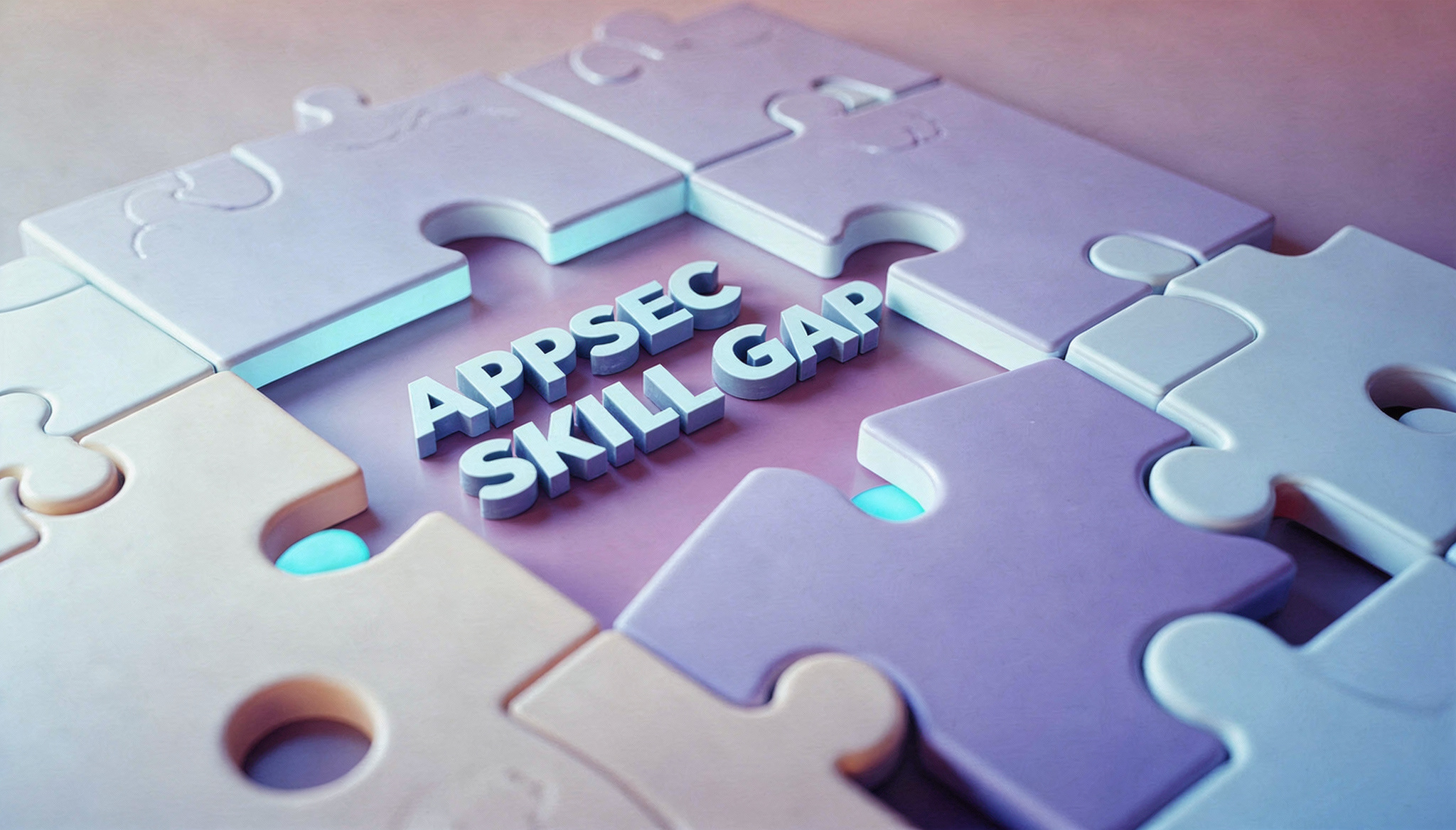
The new AppSec skill gap centers on a lack of understanding and judgment regarding AI-generated code. As AI coding assistants increase code volume and speed, developers are reviewing and accepting complex logic without full comprehension of its security implications. This shifts the cognitive load from the developer to the security team, who must evaluate code patterns generated without visibility into their origin or intent.
Traditional AppSec relies on the assumption that the developer understands the code they wrote, that code reflects deliberate design, and that security issues stem from mistakes rather than unknowns. AI-assisted coding breaks this because parts of the logic are suggested and accepted without deep validation. The developer evaluates output instead of constructing it, leading to code that is functional but may contain risks no one explicitly considered, such as missing input validation or insecure defaults from training data.
Security reviews are falling behind the speed of code generation. Developers can commit large chunks of AI-generated code quickly. By the time security findings appear, implementation decisions are locked in, context is gone, and fixes require extensive rework. Furthermore, the increased code volume creates more noise and alerts, leading to developers filtering or ignoring outputs and a breakdown in the feedback loop.
Threat modeling relies on stable architecture definitions and scheduled review cycles that happen before code is built. With AI assistants, architecture and integration patterns can evolve through real-time suggestions and design decisions happening inside prompts. These changes rarely go through structured design reviews, causing threat models to become outdated almost immediately as design and implementation occur simultaneously.
The key is to upskill developers to improve their real-time judgment of risk. Security decisions are now made the moment a developer accepts or modifies AI-generated code. Developers need to be able to evaluate AI-generated code beyond surface-level correctness, recognize insecure patterns, and understand how design decisions affect data flow and trust boundaries. This requires hands-on, scenario-driven training integrated directly into the development workflow.
Security leaders must redefine secure coding to include validating AI-generated code before it is accepted. Developers should treat generated output as untrusted input. Security practices must move into the moments where decisions are made, such as inside the IDE or at the pull request level, to provide guidance before code is committed and scanned. The focus should be on investing in developer judgment and capability, rather than simply adding more tools.

.png)


Koushik M.
"Exceptional Hands-On Security Learning Platform"

Varunsainadh K.
"Practical Security Training with Real-World Labs"

Gaël Z.
"A new generation platform showing both attacks and remediations"

Nanak S.
"Best resource to learn for appsec and product security"


.png)


Koushik M.
"Exceptional Hands-On Security Learning Platform"

Varunsainadh K.
"Practical Security Training with Real-World Labs"

Gaël Z.
"A new generation platform showing both attacks and remediations"

Nanak S.
"Best resource to learn for appsec and product security"


United States11166 Fairfax Boulevard, 500, Fairfax, VA 22030
APAC
68 Circular Road, #02-01, 049422, Singapore
For Support write to help@appsecengineer.com