



Not ready for a demo?
Join us for a live product tour - available every Thursday at 8am PT/11 am ET
Schedule a demo
No, I will lose this chance & potential revenue
x
x

Lorem ipsum dolor sit amet, consectetur adipiscing elit, sed do eiusmod tempor incididunt ut labore et dolore magna aliqua. Ut enim ad minim veniam, quis nostrud exercitation ullamco laboris nisi ut aliquip ex ea commodo consequat. Duis aute irure dolor in reprehenderit in voluptate velit esse cillum dolore eu fugiat nulla pariatur.
Block quote
Ordered list
Unordered list
Bold text
Emphasis
Superscript
Subscript

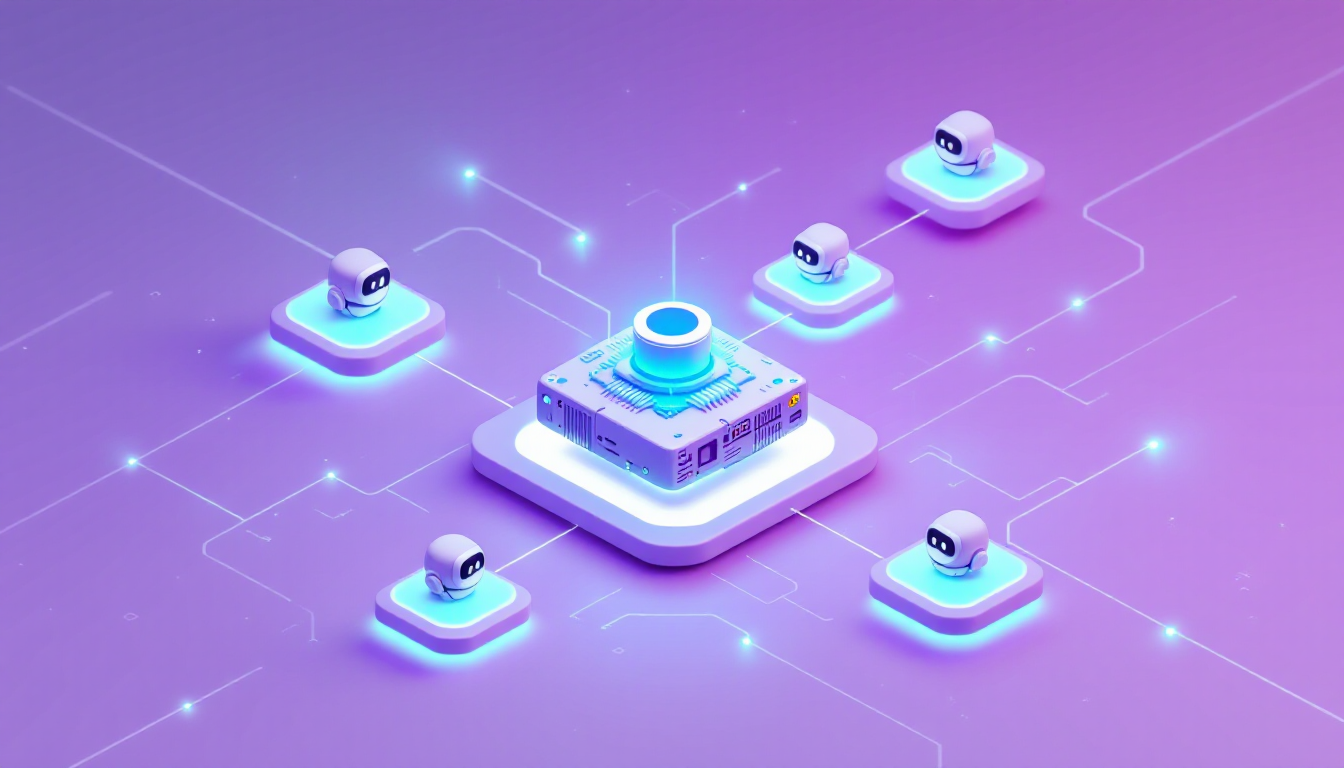
Multi-agent AI architecture refers to a system where multiple specialized AI agents collaborate to perform distinct security tasks—like threat detection, incident response, and threat intelligence. Each agent operates independently but communicates and coordinates with others to reduce alert fatigue, speed up response, and scale security operations.
Single-agent systems often lack context, generate high false positives, and can’t scale across diverse threat surfaces. Multi-agent setups reduce detection noise, enable faster incident response, and bring specialization—making them more efficient for real-world SecOps use cases like fraud detection, ransomware response, or anomaly detection in OT environments.
Prompt injection and model manipulation Data leakage across agents Over-privileged access Lack of explainability in AI decisions Insecure inter-agent communication These risks demand layered controls including ABAC, mutual TLS, zero trust policies, and explainable AI (XAI) implementations.
Use TLS 1.3 for encrypted data-in-transit. Implement mutual authentication using certificates or OAuth2. Monitor traffic between agents using Intrusion Detection Systems (IDS). Enforce strict namespace and API access controls in platforms like Kubernetes.
Healthcare – To reduce AI hallucinations and secure patient data workflows. Finance – For fraud detection (e.g., synthetic identity attacks). Manufacturing – To manage massive sensor data and prevent cyber-physical sabotage. Use cases are expanding rapidly in energy, telecom, and government sectors as well.
CrewAI – For multi-agent workflow management. JADE / SPADE – Open-source platforms for agent-based systems. TensorFlow Federated – For privacy-preserving distributed training. Kubernetes – For scalable deployment and lifecycle management. Open Policy Agent (OPA) – For implementing ABAC access control. SHAP / LIME – For AI explainability in decision-making.
Attribute-Based Access Control (ABAC) adjusts permissions dynamically based on context (agent behavior, task, data sensitivity). It reduces the attack surface by enforcing least privilege access in real time—especially important when agents operate autonomously.
Using Explainable AI (XAI) techniques like: SHAP for understanding feature influence. LIME for explaining individual decisions. Counterfactuals to show how inputs could change outputs. These help security teams audit, debug, and trust agent actions, which is essential for compliance and incident response.
Use simulation tools like: SPADE – For communication-heavy scenarios. GAMA – For modeling spatial interactions and large-scale simulations. Conduct fault injection, workload spike tests, and inter-agent conflict simulations to ensure system resilience.
Healthcare (HIPAA): Implements data minimization, encryption, explainable AI for decisions, and full audit logging. Finance (PCI DSS): Uses tokenization, ABAC, full data encryption, and traceable logs of all payment-related agent actions. These controls map directly to compliance mandates and reduce audit overhead.

.png)


Koushik M.
"Exceptional Hands-On Security Learning Platform"

Varunsainadh K.
"Practical Security Training with Real-World Labs"

Gaël Z.
"A new generation platform showing both attacks and remediations"

Nanak S.
"Best resource to learn for appsec and product security"


.png)


Koushik M.
"Exceptional Hands-On Security Learning Platform"

Varunsainadh K.
"Practical Security Training with Real-World Labs"

Gaël Z.
"A new generation platform showing both attacks and remediations"

Nanak S.
"Best resource to learn for appsec and product security"


United States11166 Fairfax Boulevard, 500, Fairfax, VA 22030
APAC
68 Circular Road, #02-01, 049422, Singapore
For Support write to help@appsecengineer.com